Saint Therese of Lisieux
Saint Therese of Lisieux is known as the Little Flower, but her spirituality is stronger than that nickname can sound. She is a saint of hidden love, trust, and small acts done with great attention.
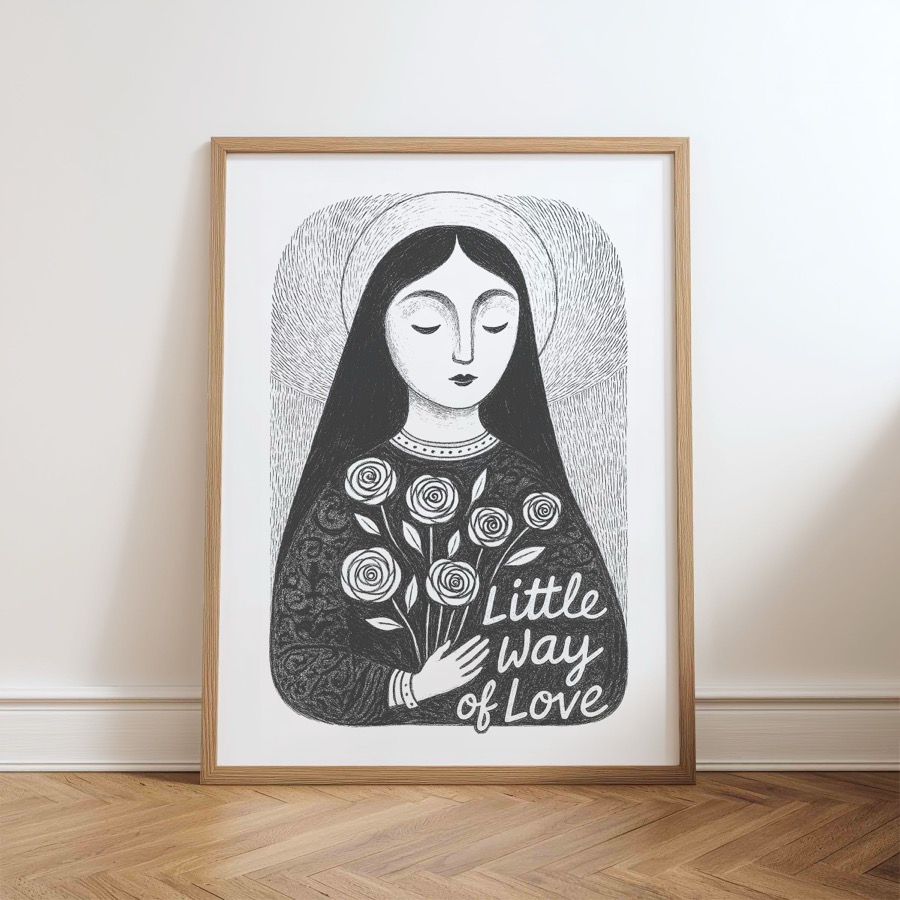
Art prints at Paper Chapel
St Therese of Lisieux Art Print
A physical art print for your home or prayer space.
Show St Therese of Lisieux printPrinted & shipped · Frame not included
Story
Saint Therese of Lisieux is known as the Little Flower, but her spirituality is stronger than that nickname can sound. She is a saint of hidden love, trust, and small acts done with great attention.
Therese Martin was born in France in 1873 and entered the Carmelite convent at Lisieux as a teenager. Her life was short and mostly hidden. She died in 1897 at the age of twenty-four, without public work or visible achievement by ordinary standards.
Her autobiography, Story of a Soul, carried her spiritual insight far beyond the convent. The "little way" she taught is simple but not sentimental: love God in the small thing in front of you, without needing to be seen.
Patronage
Saint Therese is associated with missionaries, florists, pilots, priests, and those who seek a simpler way to trust God. People turn to her when life feels ordinary, repetitive, or unnoticed.
Her patronage is especially meaningful for people who want faith to live inside daily gestures: patience, kindness, quiet service, and love offered without applause. Therese shows that hidden faithfulness is not wasted.
Feast & Symbols
Saint Therese's feast day is October 1. Common symbols include roses, flowers, a crucifix, the Carmelite habit, and a book.
The roses are recognizable, but the crucifix and habit keep the image grounded. Therese's path was tender, but also disciplined and brave. A Saint Therese image can feel meaningful near a bedside table, writing desk, prayer corner, or any place where ordinary work needs a softer spirit.